


Nurses help people to understand, plan, and coordinate care
The terms family meeting and case conference are sometimes used interchangeably. However, ‘family meeting’ may be used to describe an informal opportunity to hear from and learn about a person and their family, provide them with information and to discuss what this means for them. For example, this could include meetings with the person and their family on entry to aged care.
Case conferences (sometimes called family meetings) are a more formal meeting with the person and their family and involving the care team. The focus is on making plans or decisions about current or future care.
Related Resources
- palliAGED Evidence Summary – Care Coordination
- palliAGED Practice Tip Sheet – Case Conferences
- palliAGED Introduction Module for Aged Care – Palliative Care Case Conferences
Key concepts for case conferences (formal family meetings)
Some of the key concepts to apply, where appropriate, include:
Preparation
- with input as appropriate from other care team members, the person and their family decide who should attend
- establish a date, time and venue for the meeting and communicate this with the people who will attend
- include the purpose of the meeting in the invitation and possibly the health professionals (name, role) who will attend
- the meeting facilitator may talk to the health professionals caring for the person to gather and check information
- choose a way to record the discussion (handwritten notes, electronic record, whether a person will be nominated to takes note and summaries the discussion formally)
Verbal communication
- use respectful open questions that encourage the person to express themself and ask questions
- use the initial stages to gauge the best way to present information
- use plain language without technical terms or medical jargon.
- use the words ‘death’ and ‘dying’ where appropriate
- use active listening (listening with all your senses to what is being said and how) to ask what they know, what they want to know and how they prefer to receive information
- show empathy and understanding
Non-verbal communication
- use eye contact where appropriate
- nod your head to show you are listening but do not interrupt the person talking
- where possible sit down so that you are at the same level as the person
- be aware of body language e.g. do not look at the time, your phone, or attend to other distractions, don’t physically exclude people who are part of the conversation
- choose a time when the person is comfortable, alert and their condition is stable
- make sure the person is mentally capable of taking part in the discussion (e.g. not confused, not distressed)
- with the person’s consent, have a relative or friend present who can listen and help ask questions
- ensuring there is enough time to answer questions or repeat information so that it is understood – if not, make sure that another time is set
- provide assistance for a person with cognitive impairment (e.g. a support person, a facilitator, information in a format that is accessible for the person, extra time to present information at an acceptable pace with time for the person to consider what they have heard and to express themself)
- provide assistance from an interpreter where appropriate and organise this in advance
- make written notes immediately after and include date and times of future meeting(s).
A person’s health literacy levels (how people access, understand and use health information) should guide the way and the level of information that is provided to them. Assume low health literacy and use plain language and avoid clinical jargon and acronyms. Give information in small chunks, at the person’s pace and ask them to tell you what they have understood.
It can help to use a structured approach to guide case conferences and document any decisions or questions that arise. Ask if your organisation has a set of forms or a preferred process in place. If not, you can use the palliAGED series of forms or develop your own.

In practice
Watch: Family meetings on behalf of patients with serious illness
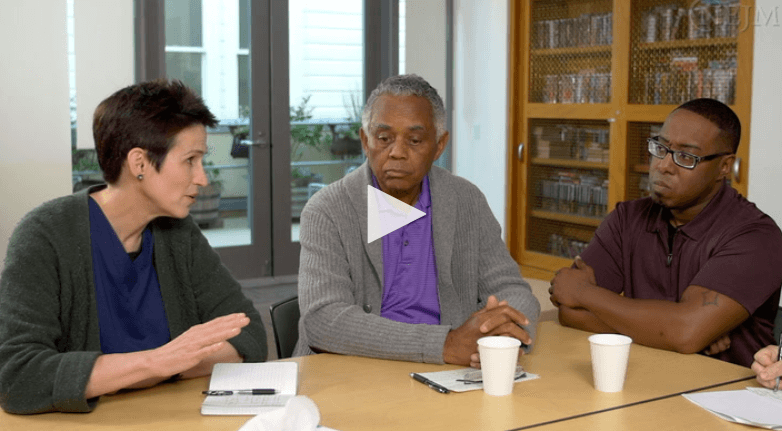
Video from New England Journal of Medicine
Family meeting resources
Last updated 15 May 2026